Joshua Tree: History, Ecology & Why It Defines the Mojave Desert
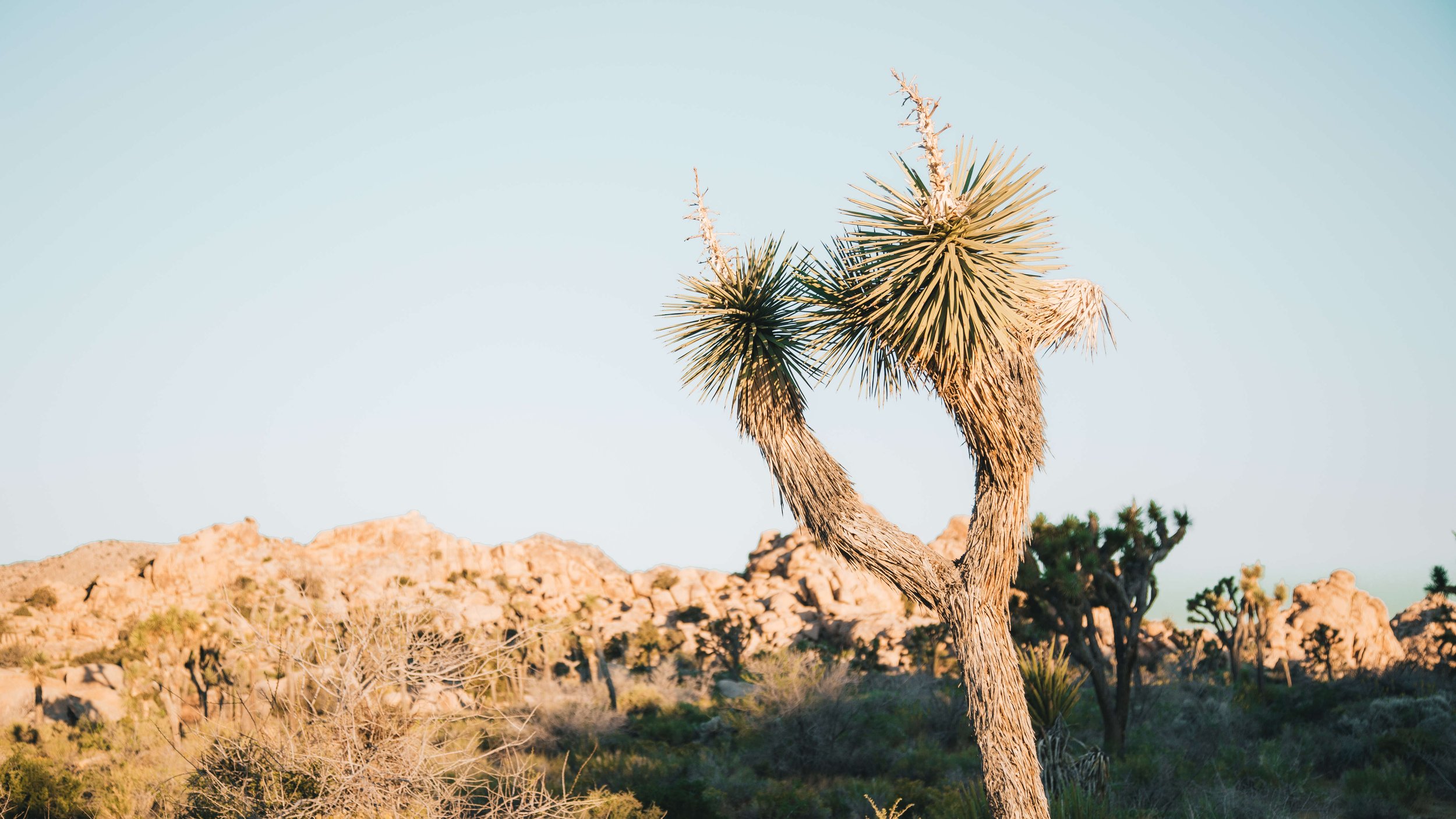
A Joshua tree sitting amongst many. Photography by Samuel Vickrey
The Joshua tree (Yucca brevifolia) stands as the botanical signature of the Mojave Desert. Underlying its iconic appearance is a history rooted deep in DNA and environmental adaptation. Classified as a monocot within the agave family, this spiky-leaf tree belongs to a lineage more closely related to lilies and palms than to typical forest trees.
Before settlers arrived, indigenous peoples such as the Cahuilla, Serrano, and Chemehuevi used the Joshua tree for essential needs like weaving its tough leaves into sandals and baskets, roasting its flower buds and seeds for food, and relying on its wood for tools and simple structures.
In the mid-19th century, Mormon pioneers traversed the Mojave. They gave the tree its name: they claimed its upward-reaching branches resembled the biblical figure raising his arms in prayer. While the exact historical record is debated, the name stuck, and with time, the species became the emblem of desert survival and spiritual journey.
Ecology & Adaptation — Why Joshua Trees Survive When Few Others Do
Desert survival depends on extremes. And Joshua trees are masters of adaptation.
Their root systems spread wide and shallow. They are fine, fibrous roots that extend horizontally, grabbing scarce water from brief rains or winter snows. Mature trees may support a trunk up to 4 feet wide.
They grow slowly; many reach 40 feet in height over decades and can live for a century or more. They also rely on a specific moth, the Yucca moth, for pollination. The moth deposits pollen while laying eggs, then its larvae eat some seeds while leaving enough to sustain future generations. This delicate symbiosis underscores the tree’s fragility and unique life rhythm.
Moreover, Joshua Tree woodlands anchor the Mojave ecosystem. Their limbs and foliage offer shelter for birds, reptiles, and mammals; their roots help bind soil and prevent erosion. In a landscape where rainfall may total less than five inches annually, every seed, every root, every weathered limb plays a role.
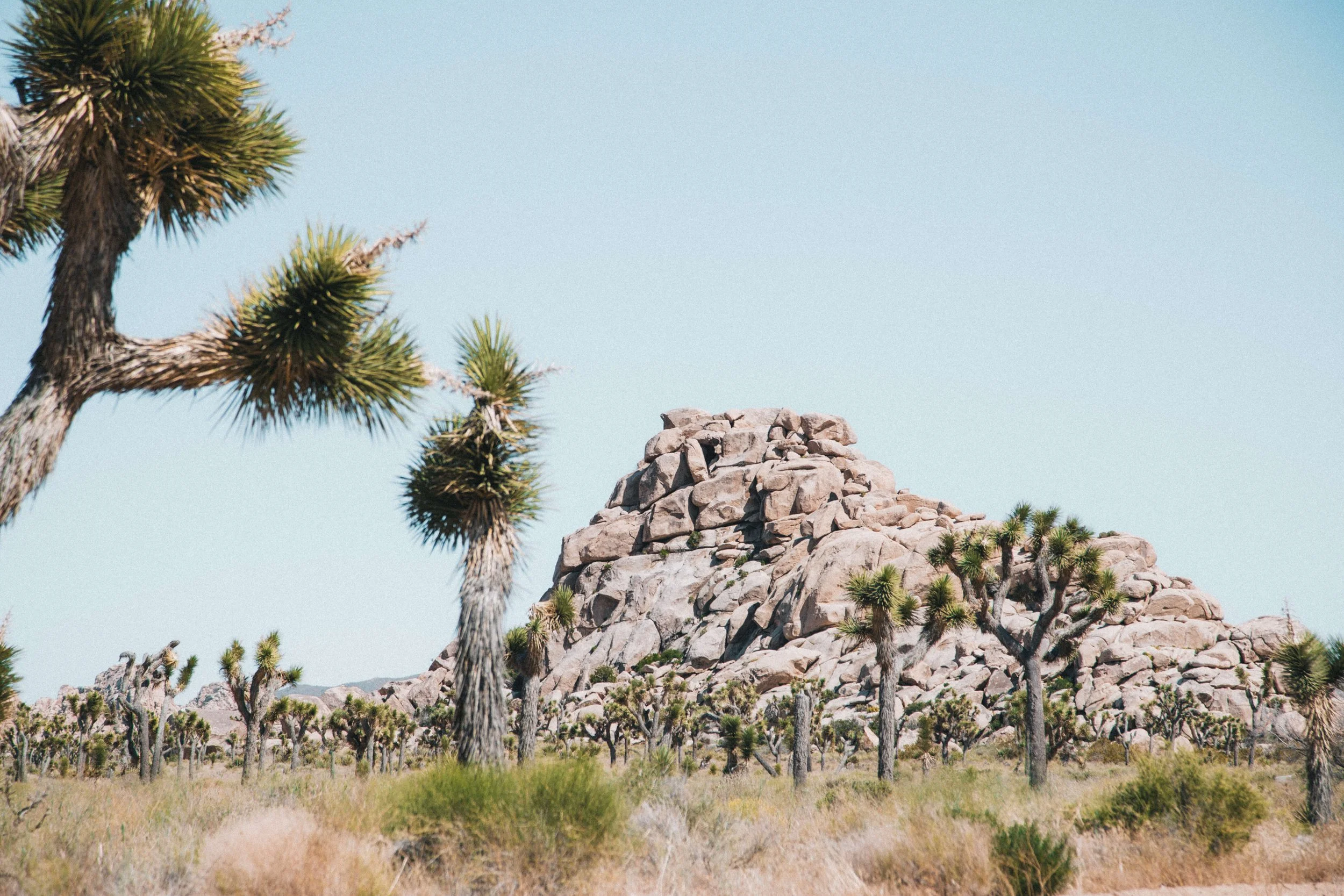
A forest of Joshuas Photography by Samuel Vickrey
Human Impact — Conservation, Climate, and Threats
The tree’s landscape has been inhabited for millennia. Early residents included groups from the Pinto Culture (c. 8000–4000 BCE), followed by Serrano, Cahuilla, and Chemehuevi peoples who adapted to desert life near springs and oases.
In 1936, the area gained protection as a national monument. Later, in 1994, it was redesignated as Joshua Tree National Park, formally safeguarding both its geology and the iconically named woodland that defines it.
Today, Joshua trees face mounting threats: rising temperatures, shifting rainfall patterns, wildfires, and habitat disturbance all challenge the species’ long-term survival.
However, conservation efforts are ongoing. Updated legislation and habitat-protection programs like the recently passed Western Joshua Tree Conservation Act aim to safeguard surviving woodlands and ensure future regeneration.
Why Photographers — And Artists — Return to the Joshua Tree Again and Again
The Joshua tree is more than a desert landmark. It’s a visual anchor of form, contrast, and time. Against cracked granite and arid valley floors, its sharp leaves catch sunlight like living neon lines. Its shape creates compositions that look more sculpted than natural.
Shooting in the Mojave means working with harsh light, deep shadows, and sometimes a slow wash of soft desert haze. When the wind is still, Joshua trees cast spider-like silhouettes. When dusk hits, their limbs catch the last glow. Sunsets over scrub and sand can turn their limbs gold, while moonlight washes them silver. Capturing the duality of harsh desert and beauty makes the Joshua tree a subject that always offers more than one story.
As a photographer, I aimed for moments when the Joshua trees grew in their own shape, had thorny crowns, and sat in front of rocky structures. Also, when the sky had hints of teal to contrast with the orange of the desert and the greens of the trees. Some of the best trees to capture sit alone where it seems they own all the real estate around them.
Where to Hang a Print Featuring Joshua Trees
This print belongs in interiors built around minimal tones, natural textures, or desert character. It works well in studios, offices, and cabins. Especially where wood, metal, or matte finishes bring out the lost-color palette of the desert. It’s also a statement piece for travelers, wanderers, or anyone drawn to landscapes built by time, not design.
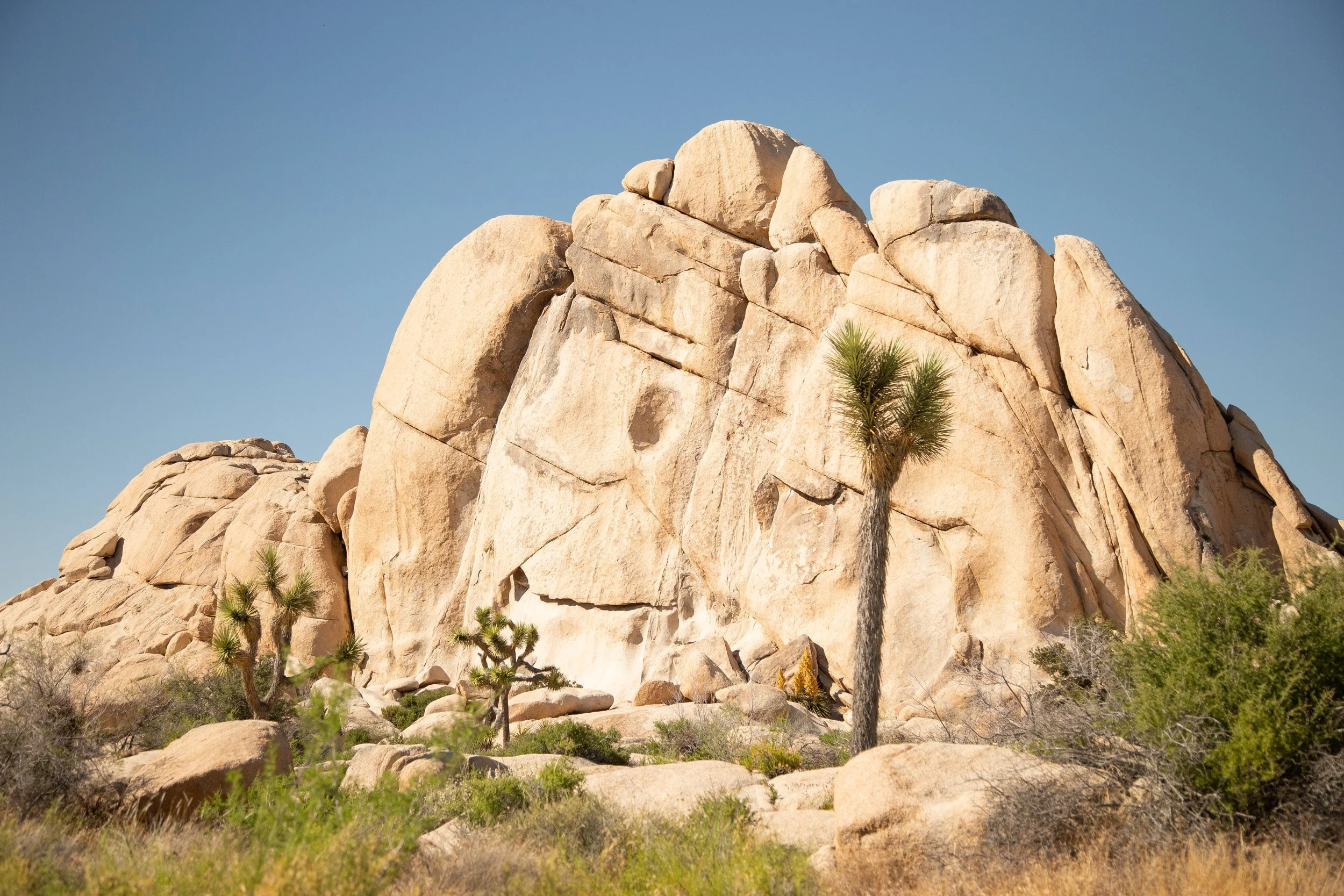
Click to view print options.