Emerald Bay, Lake Tahoe: From Ice-Age Fjord to Castle and Camera Frame
Emerald Bay was shaped long ago by ice and moving rock. Roughly 10,000 years have passed since Sierra glaciers carved a deep channel into the granite walls of Tahoe, leaving behind the inlet we call Emerald Bay. When the ice receded, water filled the newly cut basin. The shoreline and surrounding cliffs photographed today are the direct outcome of ancient pressure and slow melt.
The Washoe people lived here for thousands of years before any road or boat arrived. They called Tahoe “Daʔow a ga”, a phrase often translated as “edge of the lake.” Their stewardship predates both resort cabins and castle architecture. Light reflecting across this water is not new; people have watched this surface move for centuries.
As a photographer, that history adds weight. When I shoot Emerald Bay, I am layering my moment on top of thousands of earlier visions.
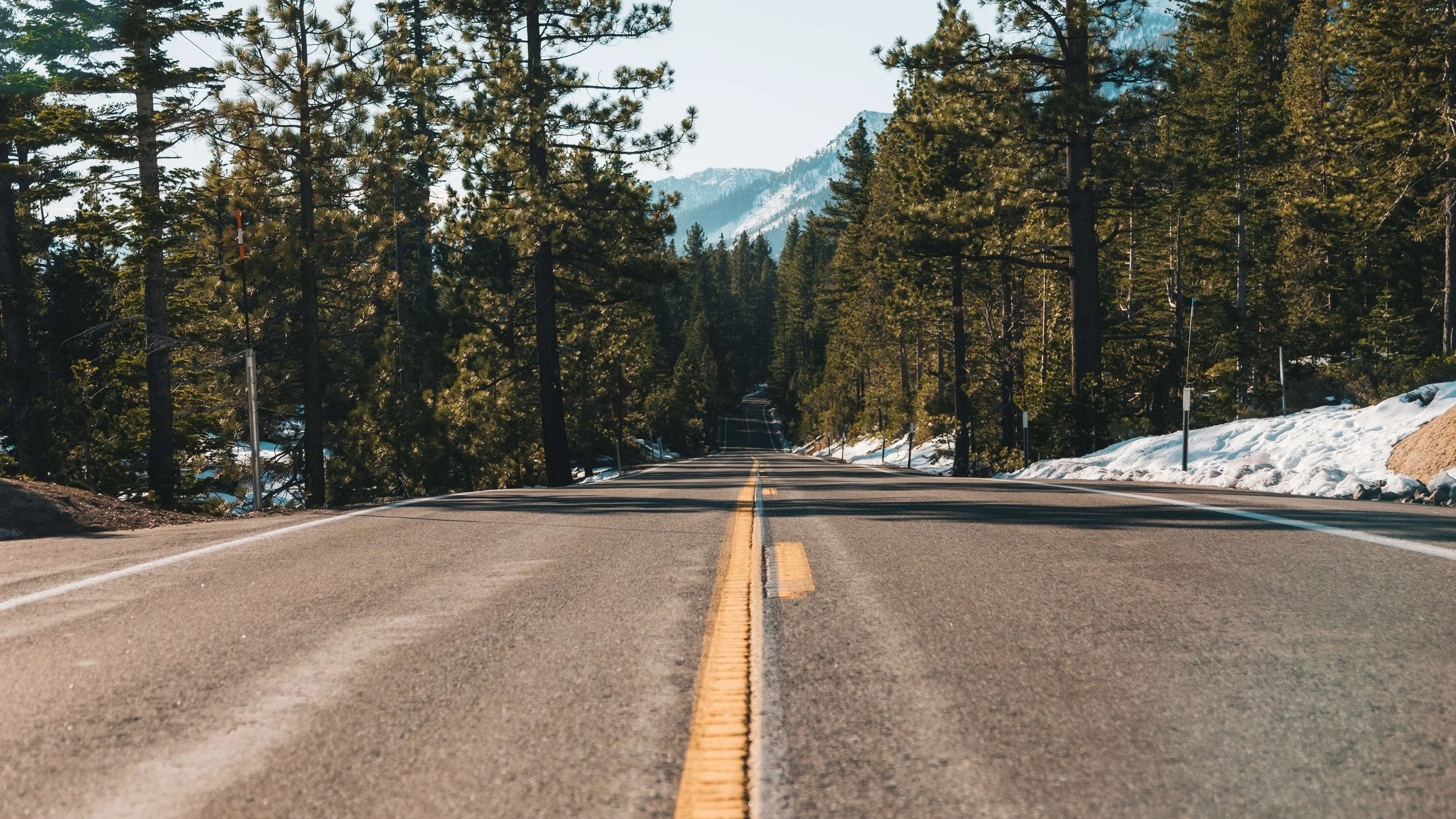
The road before Emerald Bay Photography by Samuel Vickrey
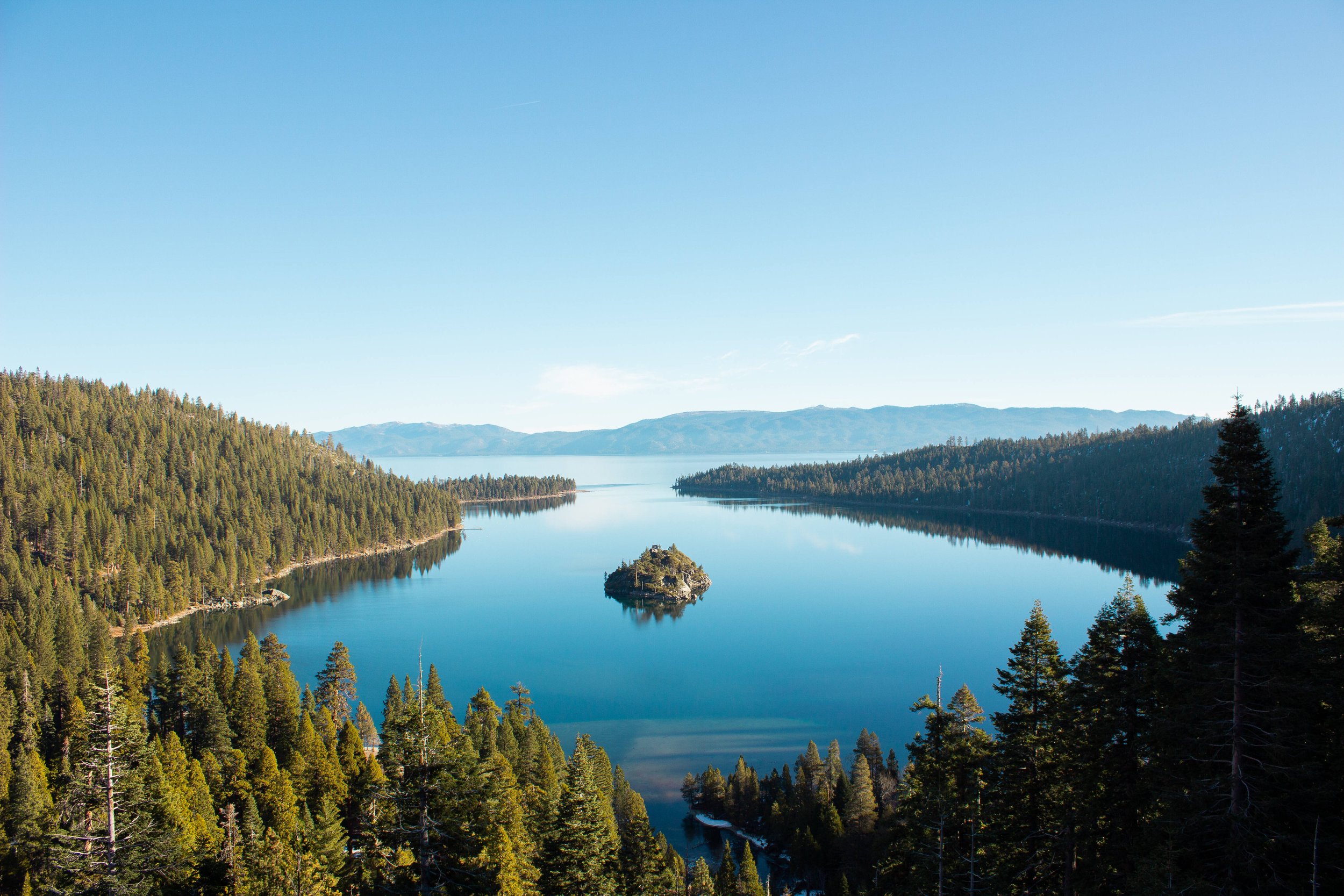
History Continued… the island in the middle
Euro-American settlement reshaped the shoreline in the mid-1800s. Wealthy industrialist Ben Holladay built a private estate here in 1862, choosing solitude, elevation, and lake access. Later, in 1928, Lora Josephine Knight purchased the land that included the shoreline and Fannette Island for about $250,000. She began construction of Vikingsholm, a 38-room Scandinavian-inspired summer home finished in 1929. Craftsmen used old-world joinery and traditional Nordic building techniques, including sections constructed without nails.
As sunlight hits those carved beams, you see a different kind of history; not glacial, but human.
Emerald Bay State Park was established in 1953. Then, in 1969, the area became a National Natural Landmark. Later, in 1994, the park expanded to include underwater sections of the bay, preserving wrecks and watercraft from Tahoe’s early recreation era.
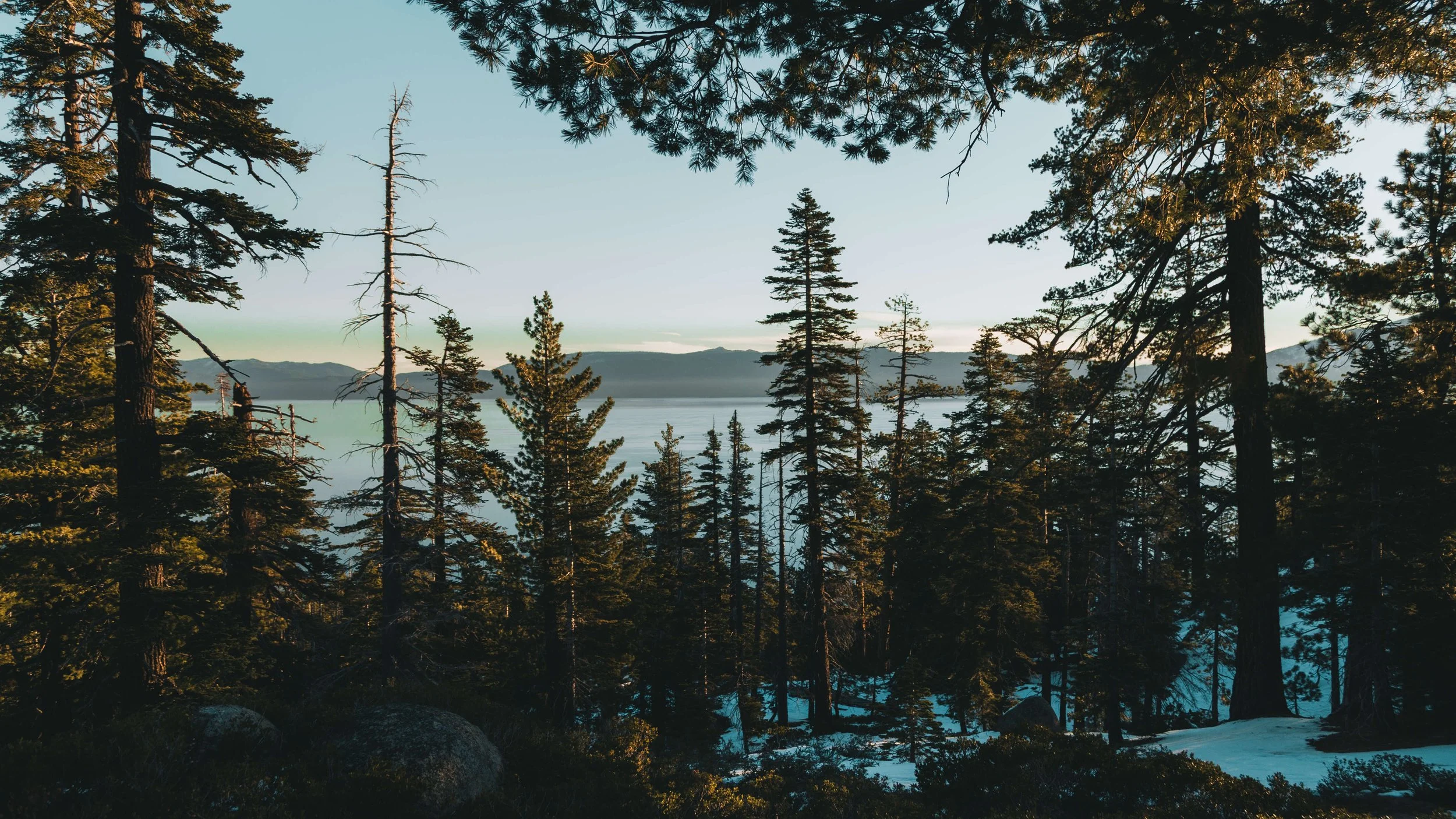
A view of Lake Tahoe just beyond Emerald Bay Photography by Samuel Vickrey
Therefore, the Emerald Bay we photograph now is preserved deliberately, above and below the surface.
When I photographed the bay, light moved across the water like metal. The greens and blues shifted with cloud cover. I framed the scene wide so the glacier-cut inlet remained the subject, not the shoreline. Photographers come here for color, but what holds the eye is the shape. Nature carved a composition long before we ever aimed a camera.
Where to Hang This Print
This print fits well in open rooms, workspaces, or calm interiors where horizon and color matter. Its greens and teals pair with wood, stone, and muted tones. It works especially well where natural light reaches the wall.
Click here to view print options.